
Climate change is no longer a distant risk—it is a direct financial factor shaping real estate investments in 2026 and beyond. From rising insurance premiums to stricter building codes and shifting buyer demand, climate resilience has become a core investment strategy, not an optional upgrade.
For investors working with REI America, understanding climate-resilient real estate means protecting capital, improving long-term returns, and future-proofing portfolios in an evolving market.
This guide breaks down what climate-resilient real estate is, why it matters in 2026, and how smart investors are capitalizing on it today.
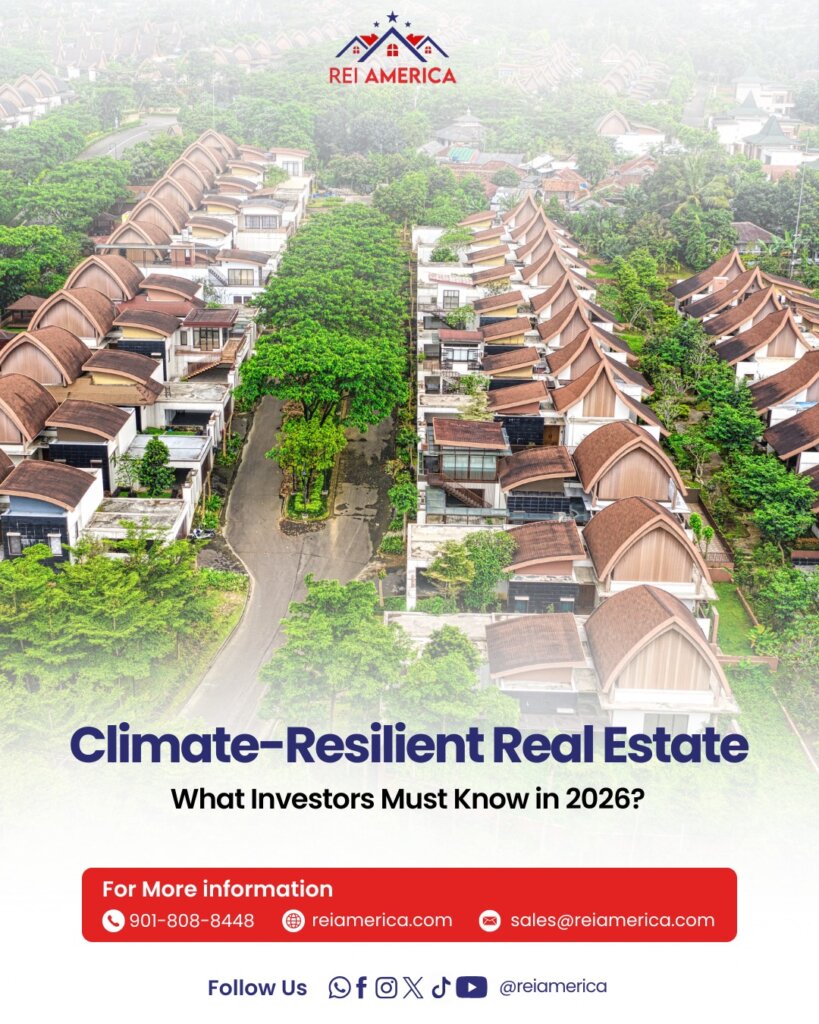
What Is Climate-Resilient Real Estate?
Climate-resilient real estate refers to properties designed, built, or upgraded to withstand climate-related risks, including:
- Extreme heat
- Flooding and hurricanes
- Wildfires
- Rising sea levels
- Power outages and water shortages
These properties focus on durability, adaptability, and operational efficiency, ensuring long-term usability and value even as environmental conditions change.
Why Climate-Resilient Real Estate Matters in 2026
1. Climate Risk Is Now a Financial Risk
In 2026, lenders, insurers, and institutional investors are pricing climate risk directly into real estate assets. Properties in high-risk areas without mitigation strategies are seeing:
- Higher insurance premiums
- Limited financing options
- Reduced resale demand
- Longer vacancy periods
Climate-resilient properties protect cash flow and exit value.
2. Insurance & Lending Are Changing Fast
Insurance companies are:
- Increasing deductibles
- Excluding climate-related coverage
- Refusing to insure poorly designed properties
At the same time, lenders now assess:
- Flood exposure
- Energy efficiency
- Structural resilience
REI America helps investors identify assets that remain financeable and insurable long-term.
3. Tenant & Buyer Demand Is Shifting
Today’s tenants and buyers prioritize:
- Energy-efficient homes
- Lower utility bills
- Reliable power and water systems
- Safe, climate-adapted neighborhoods
Climate-resilient homes rent faster, retain tenants longer, and command premium pricing.
Key Features of Climate-Resilient Properties Investors Should Look For
Flood-Resistant Design
- Elevated foundations
- Proper drainage systems
- Flood-resistant materials
- Strategic site selection outside high-risk zones
Energy-Efficient Construction
- Solar-ready rooftops
- High-performance insulation
- Energy-efficient windows and HVAC systems
- Smart energy monitoring
Heat & Weather Adaptation
- Reflective roofing materials
- Natural ventilation designs
- Landscaping for temperature control
- Storm-resistant building envelopes
Backup Infrastructure
- Battery storage systems
- Backup generators
- Water conservation and reuse systems
These features directly impact operating costs, insurance eligibility, and long-term appreciation.
Climate-Resilient Real Estate & Investment Returns
Higher Long-Term Appreciation
Climate-resilient properties are increasingly viewed as “safe assets”, driving consistent appreciation even in volatile markets.
Reduced Operating Costs
Energy-efficient and resilient buildings significantly lower:
- Utility expenses
- Maintenance costs
- Repair risks after extreme events
Stronger Exit Strategies
Buyers in 2026 actively screen properties for climate readiness.
This makes resilient assets easier to sell, refinance, or scale.
Best U.S. Markets for Climate-Resilient Real Estate in 2026
REI America focuses on markets that balance growth potential with climate adaptability, including:
- Inland growth cities with controlled climate exposure
- Master-planned communities built to new resilience standards
- Build-to-Rent (BTR) developments with sustainable infrastructure
- Emerging secondary markets benefiting from climate migration
Strategic market selection is just as important as property design.
Climate-Resilient Investing Strategies with REI America
1. Focus on New-Build & Adaptive Developments
Newer properties meet updated codes and integrate climate resilience from day one.
2. Upgrade Existing Assets Strategically
Targeted retrofits—such as energy upgrades and flood mitigation—can dramatically improve ROI.
3. Prioritize Cash-Flow Stability
Resilient properties experience fewer disruptions, protecting rental income.
4. Invest with Long-Term Vision
Climate-resilient assets align perfectly with buy-and-hold, BTR, and income-focused strategies.
Government Incentives & Policy Support in 2026
Investors can benefit from:
- Energy efficiency tax credits
- Renewable energy incentives
- Green financing programs
- State-level resilience grants
REI America helps investors navigate these opportunities to maximize net returns.
Common Mistakes Investors Must Avoid
- Ignoring climate risk data during due diligence
- Buying cheap assets in high-risk zones without mitigation plans
- Underestimating future insurance and compliance costs
- Chasing short-term gains instead of resilient fundamentals
Smart investors plan for the next 20–30 years, not just the next cycle.
Why REI America Is Leading Climate-Resilient Investing
At REI America, we combine:
- Market intelligence
- Climate-aware asset selection
- Data-driven investment strategies
- Long-term portfolio planning
Our approach ensures investors protect capital, generate income, and stay ahead of market shifts in 2026 and beyond.
Final Thoughts: Climate Resilience Is the Future of Real Estate Investing
Climate-resilient real estate is no longer a trend—it is the new standard.
Investors who adapt early will:
- Reduce risk
- Improve returns
- Gain competitive advantage
- Build portfolios that last
The future of real estate belongs to resilient, sustainable, and intelligently designed assets—and REI America is here to help you lead that future.
Ready to Invest Smarter in 2026?
📞 901-808-8448
🌐 https://reiamerica.com
📧 sales@reiamerica.com
