
Memphis real estate investment remains one of the most searched topics among cash
flow investors and for good reason. While national housing markets cool and uncertainty
spread, Memphis continues to deliver steady rental income, low entry costs, and durable
tenant demand. But is it still a smart move in 2026? Let’s break it down.
Memphis Real Estate Market: How It Responds to a
Cooling Market
When the Housing Market Slows Down
The cooling housing market doesn’t announce itself loudly. Listings sit longer. Buyers slow
down. Seller’s start negotiating. For most investors, that shift triggers hesitation.
But here’s what experienced investors know a slowdown doesn’t kill opportunity it
relocates it.
When speculative markets pull back, fundamentals-driven markets hold firms. And
Memphis Tennessee real estate is built entirely on fundamentals.Fear vs Opportunity for Real Estate Investors
When sentiment turns negative, money moves to the sidelines. And right there in that
moment of mass hesitation is usually where the smarter entry points appear.
For investors focused on Memphis rental properties, a cooling market means less
competition, more negotiating leverage, and better access to quality inventory. The
demand side of the equation of tenants who need affordable housing doesn’t slow down at
all.
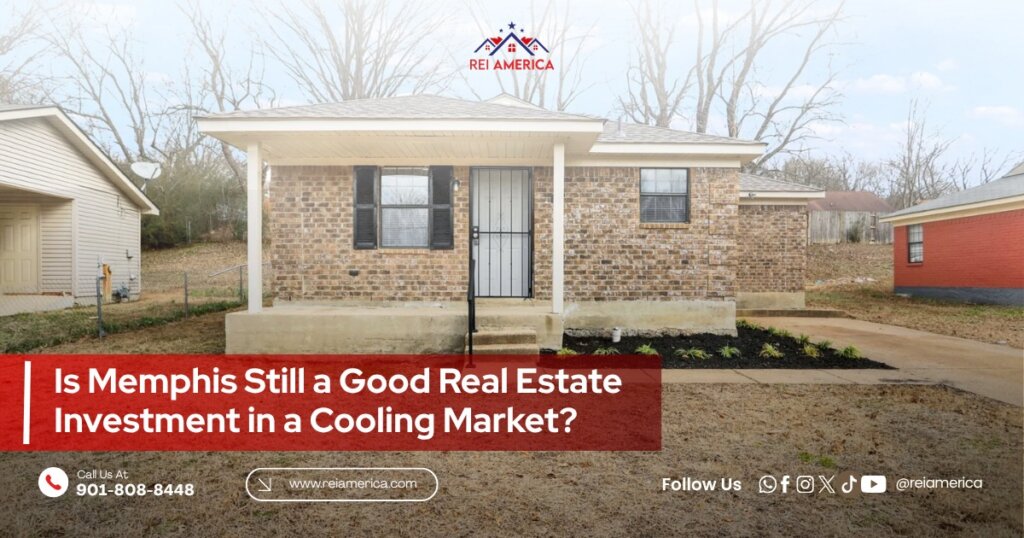
Why Memphis Tennessee Real Estate Moves Differently
The Cash Flow Foundation
Memphis isn’t a market built for appreciation hunters. It’s built for cash flow investors who
want consistent monthly income from day one.
Rent-to-price ratios in Memphis regularly outperform Tier 1 cities by a wide margin. A
property that costs $150,000 here might rent $1,200–$1,400 per month numbers that
simply don’t exist in Austin, Phoenix, or Charlotte at this price point.
This is the core of the Memphis real estate investment case: the math works without
needing price appreciation to bail you out.
Why Memphis Doesn’t Follow National Trends
Memphis was never a speculation market. No bidding wars. No FOMO offers. No prices
inflated 30% beyond asking.
The Memphis housing market is driven by workforce housing demand stable, consistent,
and largely immune to the sentiment swings that rattle coastal markets. When mortgage
rates rise nationally and buying becomes harder, more people rent. Memphis landlords
absorb that demand directly.Memphis Rental Market: The Demand Behind the
Numbers
Structural Rental Demand
Memphis has a homeownership rate of approximately 47% well below the national average
of 65%. That means more than half the city rents by default.
This isn’t a temporary demand. It’s structural. The Memphis rental market isn’t dependent
on economic booms or population surges. It’s rooted in the everyday reality of a working-
class city where renting is the norm, not the exception.
For investors, that translates to lower vacancy risk and more predictable occupancy over
time.
A Tenant Base Driven by Necessity
A significant portion of Memphis renters aren’t renting preference they’re renting because
homeownership is genuinely out of reach. Credit challenges, income levels, and limited
savings keep them in the rental market long-term.
That’s an investment reality. It means Memphis investment properties benefit from a
durable, stable tenant base that doesn’t disappear when the economy softens.
Affordability: Memphis’ Biggest Competitive Advantage
Low Entry Prices, Real Returns
The median home price in Memphis ranges between $150,000 and $180,000, making it one
of the most accessible markets for investors in the entire country.
That low entry point delivers three critical advantages:
• Lower risk exposure if prices dip further during a cooldown
• Easier positive cash flow from day one without aggressive financing
• Faster ROI compared to high-priced markets where yields are compressedWhen you buy rental property in Memphis, you’re not speculating future appreciation.
You’re buying an income stream at a price point that already makes sense.
Affordable Investment Properties in Memphis TN What That Actually
Means
For out-of-state investors searching for affordable investment properties in Memphis, TN,
the city offers something rare: a market where a modest capital base can build a real
portfolio.
Multiple properties. Diversified zip codes. Genuine monthly cash flow. All without the
million-dollar buy-in those other markets demand.
Economic Stability: The Foundation of Memphis Real
Estate
Major Employers Anchoring Demand
The Memphis Tennessee housing market is supported by one of the most recognizable
corporate anchors in the world: FedEx. As the company’s global headquarters, Memphis
hosts tens of thousands of FedEx employees with stable, long-term, location-dependent
workers who need housing.
Beyond FedEx, Memphis sits at a major geographic crossroads, making it one of America’s
top logistics and distribution hubs. That sector employs thousands across warehousing,
trucking, and supply chain management for all industries that require physical presence.
Where jobs are stable, housing demand is stable.
Consistency Over Hype
Memphis will not appear on the hottest emerging market list. That’s intentional and
valuable. Markets labeled hot attract speculators. Speculators inflate prices. Inflated
prices destroy yields. Memphis skips that cycle entirely. Its growth is measured,
sustainable, and investor-friendly for the long haul.Investing in Memphis in a Cooling Market: The Strategic
Case
Buying When Others Hesitate
Cooling markets historically produce the best entry conditions for long-term investors:
• Reduced competition fewer buyers fighting over the same inventory
• Motivated sellers more willingness to negotiate on price and terms
• Better property access quality listings stay on market longer
• Lower purchase prices directly improving cash-on-cash returns
For Memphis real estate investment, these conditions make 2026 a more compelling entry
point than the peak competition years of 2021 and 2022.
Long-Term Vision vs Short-Term Market Noise
If your exit strategy is 18 months, Memphis isn’t your market. If your strategy is 10 or more
years of rental income, debt paydown, and steady portfolio growth, Memphis makes a
serious case.
The city rewards patience. It’s not exciting. It’s reliable. And in real estate, reliable often
wins.
Real Risks of Memphis Real Estate Investment
Property Management Is Non-Negotiable
Memphis punishes hands-off investors. Tenant screening, maintenance responsiveness,
and collections of management all require active attention.
Working with a qualified Memphis property management company typically charging 8 to
10% of monthly rent is not optional. It’s part of the investment model. Factor it into your
numbers from day one.Neighborhood Selection Determines Your Returns
Memphis is not a market. It’s dozens of micro-markets within a single city.
Lower-risk areas that consistently perform well for investors include Bartlett,
Germantown, Cordova, and Midtown Memphis. Higher-risk neighborhoods tend to carry
elevated vacancy rates, maintenance costs, and collections of challenges.
Before purchasing any Memphis investment property, analyze crime data, school ratings,
employer proximity, and neighborhood rent trends at the zip code level not just the city
level.
Conclusion
Is Memphis’ real estate investment still worth it in a cooling market?
Yes, but only if you understand what you’re buying.
You’re not buying a growth story. You’re buying a cash flow story one that doesn’t need a
bull market to perform. You’re buying into durable rental demand, affordable entry prices,
stable employment, and a market that never got overheated to begin with.
When national markets get loud and uncertain, Memphis gets clearer. The fundamentals
are held. The tenants remain. The rent checks keep coming.
For the patient, a number-driven investor that’s not just good enough. That’s exactly the
point.
Frequently Asked Questions About Memphis Real Estate
Investment
Is Memphis a good real estate investment in 2026?
Yes. Memphis offers strong cash flow potential, low entry prices, and durable rental
demand, all of which remain intact regardless of national market cooling.
What returns can investors expect from Memphis rental properties?
Gross rental yields in Memphis typically range from 8 to 12%, with net cash flow depending
on financing structure, property management costs, and neighborhood selection.What makes Memphis different from other affordable markets?
The combination of FedEx’s global headquarters, a major logistics economy, a 47%
homeownership rate creating deep rental demand, and a mature turnkey investor
ecosystem sets Memphis apart from comparably priced but higher-risk markets.
Is now a good time to buy investment property in Memphis?
A cooling national market generally improves conditions for buyers with less competition,
more seller flexibility, and better pricing. Long-term investors typically treat slowdowns as
entry opportunities.
Can out-of-state investors succeed with Memphis investment properties?
Yes. Memphis has one of the most established turnkey and property management
ecosystems in the United States, making remote ownership practical and well-supported
