
A Good Property Manager Can Protect More Than Your Property
A rental property does not manage itself. Tenants need communication, maintenance needs attention, rent must be collected, and local rules must be followed.
For investors who live outside the area or prefer a more hands-off approach, a property manager can be an important part of the ownership strategy. But not every property-management company offers the same level of service, communication, or transparency.
Before hiring a property manager, take time to compare your options.
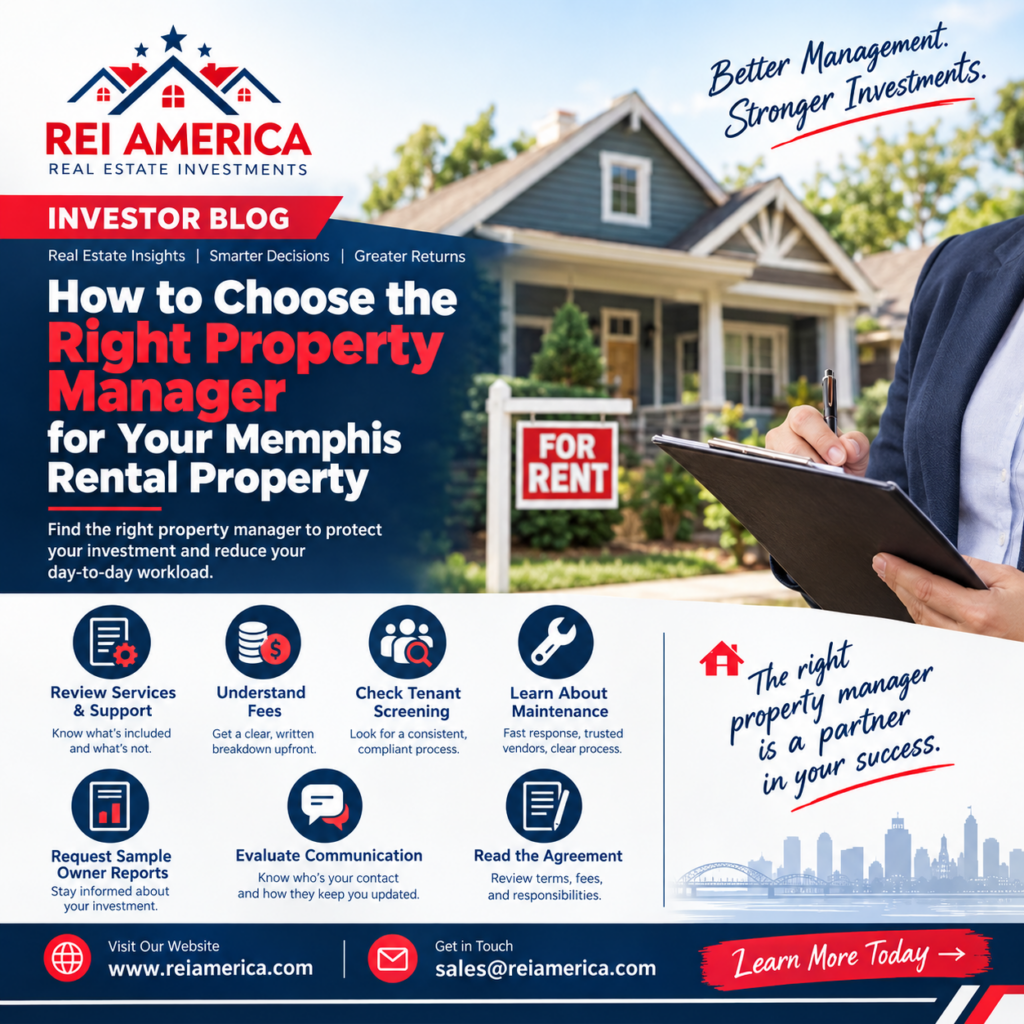
1. Understand What Services Are Included
Property-management services can vary widely. Some companies handle only rent collection, while others manage the full rental cycle.
Ask whether the manager includes:
- Marketing and tenant placement
- Tenant screening
- Lease preparation
- Rent collection
- Maintenance coordination
- Routine inspections
- Move-in and move-out inspections
- Owner reporting
- Eviction coordination, if needed
REI America provides property-management support that includes tenant screening, rent collection, maintenance coordination, and tenant communication.terry.reiamerica
2. Ask About Fees Upfront
Management fees can affect your monthly cash flow, so request a clear written breakdown before signing an agreement.
Common fees may include:
- Monthly management fee
- Tenant-placement or leasing fee
- Lease-renewal fee
- Maintenance coordination fee
- Inspection fee
- Eviction-related fees
- Early-termination fee
Ask whether fees are charged only when services are performed or whether some charges apply regardless of occupancy.
3. Review Their Tenant-Screening Process
A strong screening process can reduce the risk of late payments, property damage, and early move-outs.
Ask how the company evaluates applicants. A consistent process may include income verification, rental history, credit review, employment confirmation, and previous-landlord references.
Also ask whether the company follows fair-housing laws and applies the same criteria to every applicant.
4. Learn How Maintenance Is Handled
Maintenance is one of the most important parts of rental-property management. Delayed repairs can frustrate tenants and lead to more serious property issues.
Ask:
- How do tenants submit maintenance requests?
- Who approves repair expenses?
- What is the spending limit before owner approval is required?
- Which vendors do they use?
- How quickly are emergency repairs handled?
- How are repair invoices documented?
A good property manager should have a clear process for both routine and emergency repairs.
5. Request Sample Owner Reports
You should know how your investment is performing without having to chase updates.
Ask for a sample monthly or quarterly report. It should clearly show rent collected, expenses paid, maintenance activity, tenant communication, occupancy status, and any upcoming issues.
Clear reporting helps owners make informed decisions and identify problems early.
6. Check Communication and Availability
Responsive communication matters, especially when a repair or tenant issue needs urgent attention.
Ask:
- Who will be my main point of contact?
- How quickly are messages usually answered?
- Is there an emergency contact for after-hours issues?
- How are owners updated about major repairs?
- How often will I receive updates?
A manager may be experienced, but poor communication can still create frustration for both owners and tenants.
7. Read the Management Agreement Carefully
Before signing, review the agreement in full. Pay attention to the contract length, cancellation terms, fees, maintenance limits, insurance requirements, and responsibilities of each party.
If anything is unclear, ask for it to be explained in writing. A reputable property manager should be willing to clarify the terms.
