
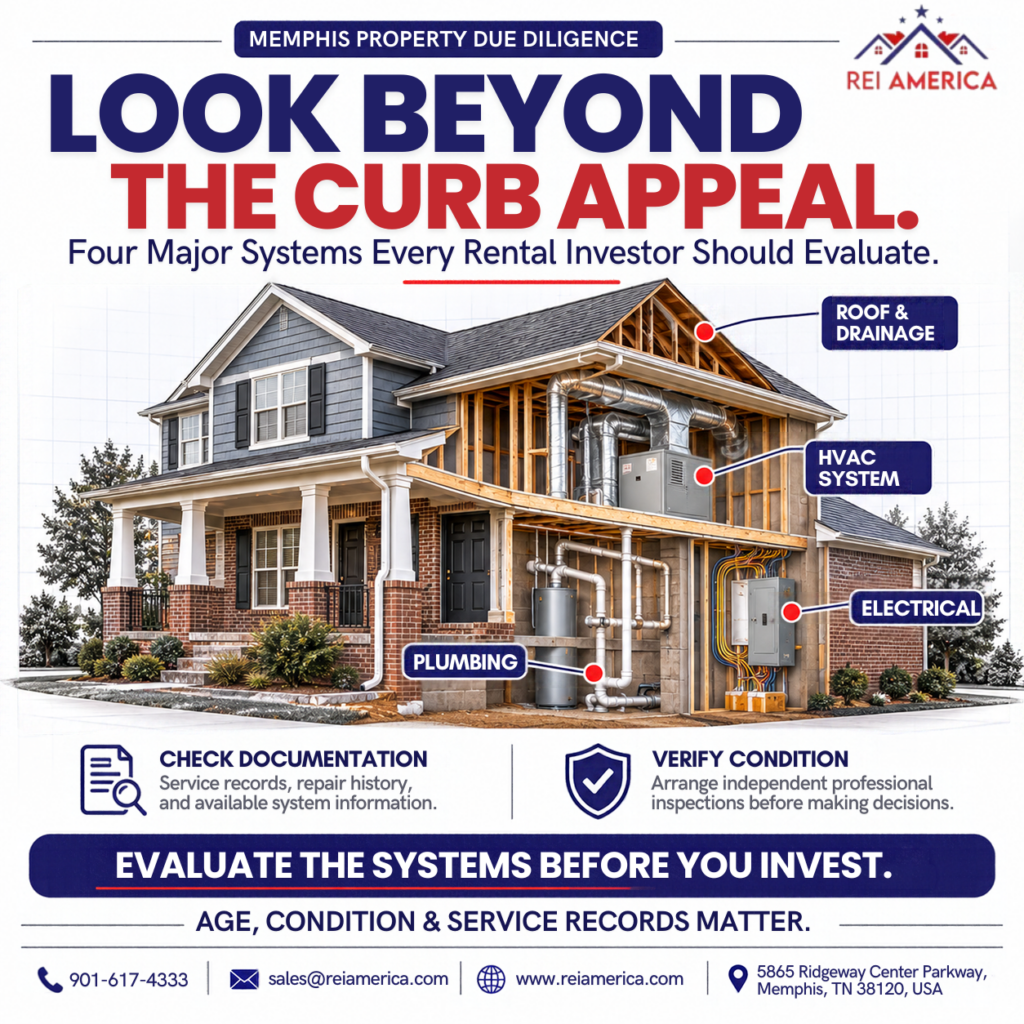
Buying an investment property in Memphis, Tennessee, can be an excellent opportunity to build long-term rental income and real estate wealth. However, a property’s purchase price, location, and potential rental income are only part of the investment equation.
Before purchasing a Memphis rental property, investors should understand what is happening beneath the surface.
A house may have beautiful landscaping, fresh exterior paint, an updated kitchen, and attractive curb appeal while hiding expensive problems with its roof, HVAC system, plumbing, or electrical infrastructure. These issues can quickly turn an attractive investment into an unexpected financial burden.
This is why rental property due diligence in Memphis should go beyond a visual walkthrough.
Whether you are purchasing a single-family rental, a turnkey investment property, or a newly constructed rental home, evaluating its major systems is essential to understanding its current condition, future maintenance requirements, and potential ownership costs.
In this guide, we explore four major systems every real estate investor should evaluate before purchasing a rental property in Memphis.
Why Property Due Diligence Matters When Buying a Memphis Rental Property
Real estate investors often spend considerable time analyzing purchase prices, projected rents, property taxes, insurance, and expected returns.
But what happens when the roof needs replacement shortly after closing? What if the HVAC system stops working during the summer? What if an undetected plumbing leak causes water damage?
These expenses can significantly affect your rental property’s cash flow.
A proper property due diligence process helps investors:
- Identify visible defects and potential maintenance concerns before closing.
- Understand the age and condition of major property systems.
- Estimate upcoming repair and replacement expenses.
- Request additional inspections when necessary.
- Evaluate whether the purchase price reflects the property’s actual condition.
- Make more informed investment decisions.
For out-of-state investors purchasing rental properties in Memphis, this process is especially important. You may not be physically present to inspect the property or supervise repairs, making professional inspections and reliable documentation even more valuable.
Let’s look at the four major systems that deserve your attention.
1. Roof and Drainage: Protecting Your Investment From Water Damage
The roof is one of the most important components of any rental property. Its primary purpose is to protect the structure and interior from weather exposure, moisture intrusion, and water damage.
However, evaluating a roof involves more than checking whether the shingles look good from the street.
A roof can appear acceptable from the outside while having underlying problems involving flashing, ventilation, drainage, or previous repairs.
What Should Investors Check?
Before purchasing a Memphis investment property, pay attention to the following:
Roof Age and Overall Condition
Ask when the roof was installed and whether the seller has documentation of previous repairs or replacement.
Look for missing, curling, cracked, or damaged shingles, deteriorated flashing, and other visible signs of wear.
Gutters and Downspouts
Gutters should be properly attached and free from significant blockages. Downspouts should direct water away from the home’s foundation.
Poor drainage can allow water to collect around the property, potentially contributing to moisture intrusion and foundation concerns.
Signs of Previous Water Damage
Look for water stains on ceilings, discoloration around roof penetrations, damaged attic materials, and signs of previous leaks.
A fresh coat of paint does not necessarily mean the underlying moisture problem has been resolved.
Roof Flashing and Ventilation
Pay attention to flashing around chimneys, vents, and other roof penetrations. Improper installation or deterioration can create opportunities for water intrusion.
Adequate roof ventilation is also important for managing heat and moisture in the attic.
Why Roof Inspections Matter for Memphis Investors
A roof replacement can represent a substantial capital expense. If an investor overlooks an aging roof before closing, the cost could affect the property’s first-year financial performance.
For example, a property generating attractive projected rental income may become less profitable if it requires significant roofing work shortly after purchase.
Investor tip: Request available roof installation records, warranties, repair invoices, and a professional assessment of the roof’s remaining useful life. If the general inspection identifies concerns, consider obtaining a more detailed evaluation from a qualified roofing professional.
2. HVAC System: Understanding Heating and Cooling Costs
Heating, ventilation, and air conditioning (HVAC) systems play an important role in tenant comfort, property maintenance, and rental readiness.
Memphis experiences hot, humid summers and cold winter periods. A properly functioning heating and cooling system is therefore an important consideration when evaluating a rental property.
An HVAC system that is old, poorly maintained, or operating inefficiently may require expensive repairs or replacement.
What Should Investors Check?
Age of the HVAC Equipment
Ask about the installation date of the heating and cooling equipment.
The age of the system alone does not determine its condition, but it helps investors understand potential replacement exposure.
Heating and Cooling Performance
Have the system evaluated by a qualified professional to determine whether it operates properly under appropriate testing conditions.
Uneven temperatures, unusual noises, weak airflow, and inconsistent performance may indicate underlying problems.
Air Filters and Ductwork
Inspect accessible filters, duct connections, and visible ductwork for excessive dust, damage, disconnections, or signs of poor maintenance.
Restricted airflow can affect system performance and indoor comfort.
Condensate Drainage
Air conditioning systems produce condensation that must drain properly.
Blocked or improperly connected condensate lines can contribute to water leaks and moisture damage.
Maintenance and Service History
Request available HVAC service records, repair invoices, equipment information, and warranty documentation.
A system with consistent maintenance records gives investors more information than one with an unknown service history.
Why HVAC Condition Matters for Rental Investors
A malfunctioning HVAC system can create tenant complaints, emergency service calls, and unexpected maintenance expenses.
For investors who rely on professional property management, a dependable HVAC system can also make ongoing maintenance easier to plan.
Investor tip: Do not rely exclusively on the thermostat turning on. Request an appropriate professional HVAC evaluation and ask about the system’s condition, maintenance needs, and estimated remaining useful life.
3. Electrical System: Safety, Capacity, and Reliability
Electrical problems can be difficult to identify during a casual property walkthrough.
A home may have functioning lights and outlets while still having outdated wiring, overloaded circuits, improperly installed electrical components, or other safety concerns.
For rental property investors, electrical due diligence should include both visible components and a professional assessment when warranted.
What Should Investors Check?
Electrical Panel Condition
The electrical panel should be evaluated for visible damage, corrosion, overheating indicators, improper connections, and other potential concerns.
Ask whether the panel’s capacity is appropriate for the property’s electrical demands.
Wiring Condition
Have accessible wiring reviewed for deterioration, improper modifications, exposed conductors, and other potential hazards.
Older homes may require additional attention depending on the type and condition of their electrical infrastructure.
Outlets and Switches
Check whether accessible outlets, switches, and light fixtures operate properly.
Pay particular attention to required GFCI protection in appropriate locations, such as bathrooms, kitchens, garages, and outdoor areas.
Circuit Breakers and Safety
A qualified electrician can evaluate whether circuit breakers and other protective components are functioning appropriately.
Repeatedly tripping breakers should never be dismissed as a minor inconvenience without identifying the cause.
Previous Electrical Work
Ask for available permits, invoices, and documentation relating to major electrical upgrades or repairs.
Unverified modifications may require additional investigation before you finalize your purchase.
Why Electrical Inspections Matter
Electrical issues can create safety risks, interrupt rental operations, and result in unexpected repair costs.
Investors should never assume that an electrical system is safe simply because the lights turn on.
Investor tip: Have a qualified professional investigate suspected electrical deficiencies. Do not attempt to open electrical panels or perform electrical testing yourself unless appropriately qualified.
4. Plumbing System: Preventing Leaks and Expensive Repairs
Plumbing is another major system that deserves careful attention during Memphis rental property due diligence.
Even relatively small plumbing problems can lead to significant expenses if they remain undetected. A slow leak behind a wall, a deteriorating water heater, or a damaged sewer line can create problems that extend beyond the immediate repair.
For rental investors, plumbing condition is directly connected to property maintenance, tenant satisfaction, and long-term ownership expenses.
What Should Investors Check?
Water Supply Lines and Visible Pipes
Look for corrosion, visible leaks, damaged connections, and signs of previous plumbing repairs.
Pay attention to areas underneath sinks, around toilets, near water heaters, and in accessible utility spaces.
Water Pressure and Drainage
Check water flow at accessible fixtures and observe whether sinks, showers, and tubs drain properly.
Slow drainage, unusual odors, and recurring backups may indicate problems that deserve further investigation.
Water Heater Condition
Ask about the water heater’s age, installation, maintenance history, and current condition.
Look for visible corrosion, leakage, damaged connections, and signs of deterioration.
Toilets, Faucets, and Fixtures
Check for running toilets, leaking faucets, loose fixtures, and damaged seals.
Small issues can become recurring maintenance requests if they are not addressed before a tenant moves in.
Main Sewer Line
For older properties or homes with signs of drainage problems, consider a separate sewer scope inspection.
A standard visual walkthrough may not reveal problems inside underground sewer lines.
Why Plumbing Due Diligence Matters
Undetected plumbing problems can cause water damage, emergency maintenance calls, property disruption, and expensive repairs.
For rental investors, the cost of addressing a plumbing problem before closing may be considerably easier to manage than dealing with an emergency after tenants occupy the property.
Investor tip: Request available plumbing repair records and consider a professional sewer line evaluation when the property’s age, history, or inspection findings justify it.
A Practical Memphis Rental Property Inspection Checklist
Before making a final purchasing decision, use this checklist to organize your due diligence.
Roof and Drainage
- Confirm the approximate roof installation date.
- Review available roof repair and replacement records.
- Check visible shingles and flashing.
- Evaluate gutters and downspouts.
- Look for signs of water intrusion.
- Check whether exterior drainage directs water away from the home.
HVAC System
- Confirm the age of heating and cooling equipment.
- Review available maintenance records.
- Arrange professional system testing.
- Check accessible filters and ductwork.
- Look for visible condensate drainage problems.
- Obtain an estimate if repairs or replacement may be needed.
Electrical System
- Review the electrical panel’s visible condition.
- Check accessible outlets and switches.
- Look for exposed or damaged wiring.
- Review appropriate GFCI protection.
- Ask about previous electrical upgrades.
- Obtain a qualified electrician’s assessment when concerns arise.
Plumbing System
- Check accessible supply pipes for leaks.
- Test water flow at fixtures.
- Check sinks, showers, and tubs for drainage problems.
- Inspect the visible water heater condition.
- Look for water stains and moisture.
- Consider a sewer scope inspection when appropriate.
Documentation and Professional Verification
- Request available maintenance and repair records.
- Review relevant warranties and permits.
- Obtain an independent professional property inspection.
- Request specialist evaluations for significant concerns.
- Document repair estimates and potential replacement costs.
- Review all findings before making your final purchasing decision.
Beyond the Four Major Systems: Additional Due Diligence Considerations
While the roof, HVAC, electrical, and plumbing systems are essential, they are not the only components investors should evaluate.
A complete Memphis investment property evaluation should also consider:
Foundation and Structural Condition
Look for significant cracking, uneven floors, sticking doors, and other visible indicators that may require further structural evaluation.
Windows and Exterior Doors
Check the condition of frames, seals, locks, and weatherproofing. Damaged windows and doors can affect security, energy efficiency, and tenant comfort.
Attic and Crawl Space
Where accessible, review these areas for moisture, ventilation concerns, insulation problems, pest activity, and visible structural issues.
Interior Condition
Evaluate flooring, ceilings, walls, bathrooms, kitchens, and built-in appliances. Look for signs of water damage, deterioration, and deferred maintenance.
Property Records and Repair History
Request available permits, invoices, warranties, previous inspection reports, and documentation of significant improvements.
The objective is to understand the property’s overall condition rather than focusing exclusively on cosmetic improvements.
How Property Inspections Affect Your Memphis Rental Investment Numbers
Property inspections should be connected to your financial analysis.
A rental property may appear profitable based on projected monthly rent, but the financial picture changes when upcoming repairs and capital expenses are included.
Consider this simplified example:
Imagine purchasing a Memphis rental property for $200,000 with an expected monthly rent of $1,600.
The projected annual gross rental income would be:
$1,600 × 12 = $19,200
Now imagine the inspection identifies an aging HVAC system, roof maintenance requirements, and plumbing repairs.
These potential expenses should be incorporated into your investment analysis before you decide whether the purchase price and expected rental income still make sense.
Investors should distinguish between:
- Immediate repairs: Work required to address existing defects or prepare the home for occupancy.
- Routine maintenance: Ongoing expenses associated with normal property ownership.
- Capital expenditures: Larger replacements or improvements, such as a roof or HVAC system.
- Contingency reserves: Funds set aside for unexpected expenses.
A proper financial evaluation should account for all of these categories rather than assuming that projected rent will translate directly into profit.
What Should Out-of-State Investors Know About Memphis Property Due Diligence?
Memphis attracts real estate investors who want to purchase rental properties without necessarily living near their investments.
However, purchasing remotely requires a more organized due diligence process.
If you are investing from California, New York, Florida, Arizona, or another state, you may not be able to visit every property personally or monitor every maintenance issue.
Consider the following practices:
1. Request Detailed Inspection Reports
Ask for written reports that identify deficiencies, include photographs where available, and explain which issues need further evaluation.
2. Verify Important Repairs Independently
Do not rely exclusively on verbal assurances that a problem has been fixed. Request invoices, warranties, permits where applicable, and professional confirmation.
3. Understand the Property’s Maintenance Requirements
Ask about the expected maintenance needs of the roof, HVAC, plumbing, and electrical systems.
4. Work With Reliable Local Professionals
Independent inspectors, qualified contractors, and experienced property managers can help provide local oversight.
5. Evaluate the Investment Beyond Its Purchase Price
Consider the property’s condition, rental demand, operating expenses, maintenance requirements, and long-term investment objectives together.
The goal is not simply to purchase a property in Memphis. It is to purchase an investment that makes sense financially and can be maintained responsibly over time.
Frequently Asked Questions About Memphis Rental Property Due Diligence
1. What should I inspect before buying a rental property in Memphis?
Start with the roof and drainage, HVAC system, electrical infrastructure, and plumbing. You should also evaluate the foundation, structural condition, windows, interior, and available property records. Arrange an independent professional inspection before finalizing your purchase.
2. Is a home inspection necessary when buying a turnkey rental property?
Yes. Turnkey describes the investment and management arrangement, not a guarantee that every property component is new or free from defects. An independent inspection helps investors understand the property’s actual condition and identify potential maintenance requirements.
3. How old is too old for a rental property’s HVAC system?
There is no single age that automatically makes an HVAC system unsuitable for investment. Its condition, maintenance history, efficiency, operating performance, and expected remaining useful life should all be considered. A qualified HVAC professional can provide a more meaningful assessment.
4. Should I get a sewer line inspection before buying an older Memphis home?
A sewer scope inspection can be valuable when purchasing older properties, particularly when there are recurring drainage problems, previous sewer repairs, or concerns identified during a general inspection. It helps evaluate portions of the sewer line that cannot be examined through a normal walkthrough.
5. Can I negotiate the purchase price based on inspection findings?
Depending on your purchase agreement and negotiation position, significant inspection findings may provide grounds to request repairs, a price adjustment, a seller credit, or other mutually acceptable terms. Review your contractual deadlines and consult your real estate professional or attorney before making decisions.
6. Why is property due diligence especially important for out-of-state investors?
Remote investors may have limited opportunities to visit properties and supervise maintenance. Professional inspections, documented repair histories, independent evaluations, and reliable local property management can help reduce uncertainty and improve investment decision-making.
Make Informed Decisions Before Investing in Memphis Real Estate
A successful rental property investment involves much more than finding an attractive home at the right price.
Understanding the condition of the roof, HVAC system, electrical infrastructure, and plumbing can help investors identify potential expenses before they become costly surprises.
Whether you are purchasing an existing rental property or considering a newly constructed investment home, thorough due diligence should remain an essential part of your buying process.
At REI America, we believe informed investors make better real estate decisions. Our focus is on helping investors explore Memphis turnkey rental property opportunities and understand the important considerations involved in building a real estate investment portfolio.
Looking for investment properties in Memphis, Tennessee?
Explore available opportunities and learn more about investing in professionally managed Memphis rental properties.
REI America
Real Estate. Real Returns. Real Legacy.
Website: https://reiamerica.com/
Investment Opportunities: https://invest.reiamerica.com/
Phone: 901-617-4333
Email: sales@reiamerica.com
Address: 5865 Ridgeway Center Parkway, Memphis, TN 38120
Before purchasing any investment property, consult qualified independent inspection and real estate professionals. Property condition, maintenance costs, and investment performance vary by property.
